SPINE Programming Theory research paper
Prerequisite Article
|
Tate, Branch, Poussard |
SPINE Programming Theory |
DECISION SCIENCES INSTITUTE
API Code Generation of Zero Trust, Data-driven Websites, Digital Twins with SPINE Programming Theory
Christopher Tate
Computate LLC CEO and Red Hat Research Principal Software Engineer
Utah, USA
Benjamin D. Branch
CEO QSBG, SPT Architect & Researcher
Doha, Qatar
Denis Poussard
Smart Aquaculture Software Engineer
France
ABSTRACT
SPINE Programming theory (SPT) is a form of on-device, local, sovereign AI code indexing and code generation. A watcher service runs locally to watch a project directory for code files created and modified, and parses code files and code comments as changes occur. SPINE Programming development, code indexing, and code generation lets developers focus on business logic, allowing APIs, pages, access control, and database to be AI generated. On average, SPINE Programmers write 2% - 4% of code by hand, the other 96% - 98% of the code is AI generated, resulting in 33 to 50 times faster software development.
KEYWORDS: software engineering, automatic programming, human-computer interaction, HCI, generative AI, zero trust architecture, fine-grained access control, cloud security, multi-tenant environments, adaptive feedback loops, open source geospatial tool
INTRODUCTION
SPINE Programming theory (SPT) is a form of on-device, local, sovereign AI code indexing and code generation. A watcher service runs locally to watch a project directory for code files created and modified, and parses code files as changes occur. An open source search engine running locally is used to index introspection data about the modified code classes, constructors, methods, fields, and comments. Any Java class can become a SPINE program by extending a non-existent super class that will be generated after the code is saved. A class can become a Spine data model by adding class comments with YAML rules describing language context, persistence, caching, APIs and web pages for creating, patching, deleting, and viewing models, with authorization groups and scopes for fine-grained access control.
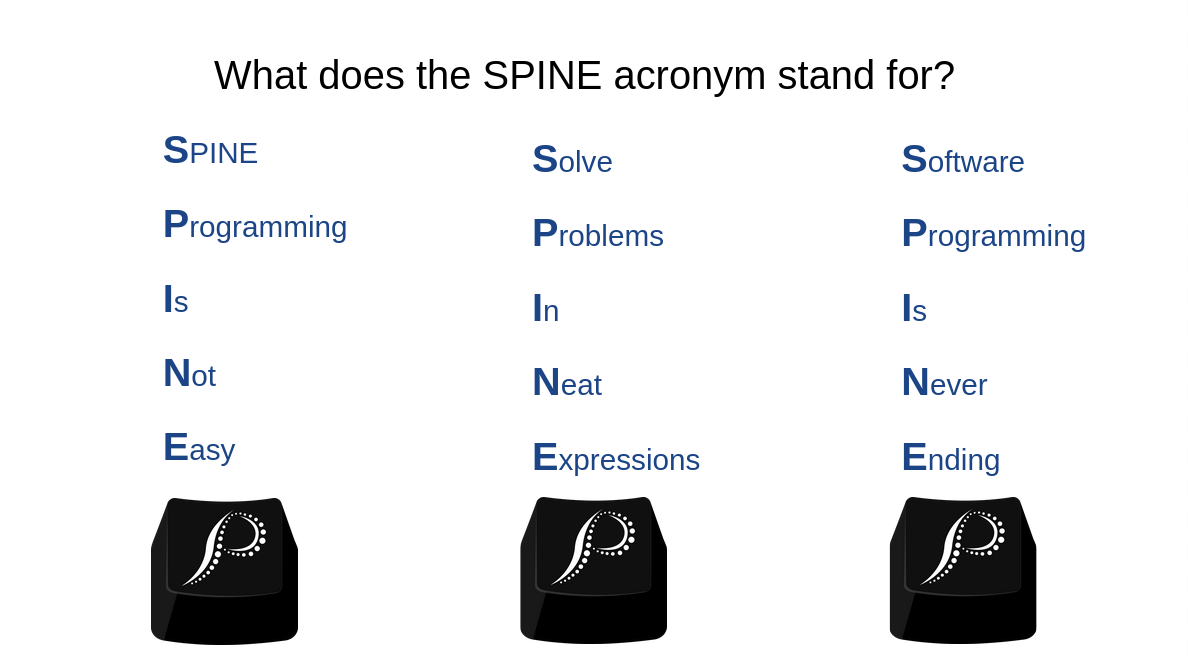
This process of SPINE Programming, development, self-documentation, code indexing, and code generation lets developers focus on business logic, allowing the models, backend APIs and interfaces, HTML page templates, OpenAPI specification, and database schema to be generated entirely as AI generated code. All SPINE Programming models, backend APIs, and HTML templates are built with inheritance, with additional classes and templates automatically created for developers to override any part of the AI generated code, and implement additional business logic on top of the default APIs. On average, SPINE Programmers write 2% - 4% of the project’s code by hand, and the other 96% - 98% of the code is AI generated, resulting in 33 to 50 times faster software development. SPINE Programming is a recursive acronym that stands for "SPINE Programming is not easy" because of the depth of knowledge required to be a SPINE Programmer—which is the purpose of this research, to explain the actions programmers can take to increase their software development productivity by 4900% entirely on their own computer.
Data driven websites are built for organizational outcomes to model actual data that can be accessed publicly or access controlled using an external identity provider for authentication and authorization. Users must enter authentication credentials before being authorized to access certain data in the website. SPINE Programming Theory has easy to follow rules into code comments for defining data models and web pages for creating, accessing, and modifying data. A SPINE Programmer installs a local AI agent watcher service, provided by the Java java.nio.file.WatchService, to watch the programmer’s code project directories for created and modified file events. A distributed application cluster manager provides scalable file locking capabilities when generating code without conflicts. An open source search engine is used by the watcher service to store a complete structured index of your local code parts as they are added or modified. The same event driven watcher service that is used to index your codebase, performs introspection on the code and generates additional code for the developer running directly on the developer's computer.
Additional rules can be written into the Java class comments for defining user groups with policies and permissions to access resources with various scopes to GET, POST, PATCH, DELETE and import data. Data driven websites require data APIs to query, create, and patch data in web compatible formats like JSON. The same scope based permissions for accessing data in a website should be the same as accessing the data in a JSON API. For this reason, SPINE Programming makes it easy to build consistent APIs and web pages with the same permissions required for each user on each request to access the model data, whether that is in web page form or as a JSON API.
SPINE PROGRAMMING ACCESS CONTROL POLICIES
This paper adds to the rationale of Zero Trust Enforcement Using Microsegmentation, Identity-Aware Proxies, and Continuous Adaptive Risk Assessment in Multi-Tenant Cloud Environments (Kalejaiye, Shonubi, 2025) where SPINE programming supports continuous innovation with a generative AI approach for structured and ethical AI with sovereign data AI outcomes as a digital twin toolset. Specifically, (Kalejaiye, Shonubi, 2025) discussed a concept of microsegmentation and identity-aware proxies where SPINE programming achieves simple data modeling network policy controls in Java class comments with its local watcher (continuous monitoring of code) and code generation services (event driven code indexing and generation of code).
The primary objective of continuously adaptive risk assessment (CARA) architectures is to contextualize access to data. SPINE Programming simplifies the software development and event-driven creation of groups, policies, and scoped permissions to company data. As (Kalejaiye, Shonubi, 2025) described, SPINE Programming is "introducing real time intelligence to access control" to extend existing organizational policies for new models to trusted groups of users rapidly with a generative AI approach.
SPINE PROGRAMMING DIGITAL TWINS
According to FIWARE, "Digital Twin data representation is built based on information gathered from many different sources, including sensors, cameras, information systems, social networks, end users through mobile devices" (FIWARE, 2021). Similar to SPINE Programming, which is an open source solution to software development, FIWARE was created with the ultimate goal of creating an open sustainable ecosystem around public, royalty-free and implementation-driven software platform standards easing the development of smart solutions and supporting organizations in their transition into smart organizations. FIWARE provides Smart Data Models in GitHub for Smart Cities, Smart Agriculture, Smart Aquaculture, Environmental data models and more. Together with SPINE Programming intelligent code indexing and code generation, a repository of useful data models can be indexed in a search engine, and rapidly built into a data-driven website and API to address the needs of a community following the Smart Data Model standards, see the Smart Device API Code Generation with AI/ML hackathon (Tate, 2024).
SPINE Programming is currently being used to develop and maintain a Smart Aquaculture digital twin at smaq.computate.org to manage intelligent fisheries, that may be suitable for global support of aquaculture and fisheries outcomes. As such, the use of sovereign AI data and infrastructure training allows small businesses the zero trust tools for potential Federated digital twin solutions for operational decision making optimization. As such, the customization of SPINE Programming fosters interdisciplinary and community based research at an industry pace. Such abilities can provide high schools, academia and communities a tool for rapid compliance to AI policy that is currently in place. Moreover, SPINE Programming follows the principles of ethics and best cybersecurity practices for operations.
These data driven websites illustrate event driven architecture that caters to real time or near real time capabilities if desired, such digital simulations can forecast and federate community problem solving. Hence, the cost complexity problem solving and lifecycle management could be greatly reduced once the realization of the watcher service is fully comprehended at Human-Computer Interaction, for assisted operational AI from a zero trust compliant cloud native architecture.
In Digital Twin applications, Carnegie Mellon Digital twin center advocated that digital twins are applicable in the following areas: Additive Manufacturing, biomanufacturing, future of manufacturing workforce, Generative manufacturing, intelligent robotics for manufacturing and micro/nano manufacturing (Manufacturing Futures Institute, 2025). SPINE Programming works to extend the FIWARE definition to necessary workflows and the process of creating high fidelity digital simulations as described by Challenges and opportunities for the application of digital twins in hard-to-abate industries (Hafeez et al, 2024). SPINE Programming excels in digital twin work force training providing zero trust and fine-grained access with operational metrics that prove its robustness and operational cost savings in deployment speed, and event driven features.
GETTING STARTED WITH SPINE PROGRAMMING
Required local microservices
There are three required microservices required for SPINE Programming. A local AI agent watcher service, provided by the Java java.nio.file.WatchService, can be configured to watch a programmer’s code project directory for created and modified file events. A distributed application cluster manager, like Apache Zookeeper, provides scalable file locking capabilities when generating code without conflicts. An open source search engine, like Apache Solr, is used by the watcher service to store a complete structured index of your local code parts as they are added or modified. The same watcher service that is used to index your codebase, performs introspection on the code using a forked version of the QDox Java code parsing library (Tate, 2022) to determine by rules in the code comments with the expected additional code to generate. The reason for the open source fork of QDOX was created was the new features to order class members and track imports were not useful to the upstream project, and it was suggested to write your own implementation — the complete details are summarized in this pull request (Tate, 2018). The watcher service, distributed application cluster manager, and open source search engine are the only three required microservices for SPINE Programming.
The best tools to help developers get started with SPINE Programming is to use a container application deployment environment, like Red Hat OpenShift Local or Kubernetes. Containers are preinstalled applications on small, layered virtual operating systems; they speed up the download, configuration, and running of prerequisite SPINE Programming microservices. Two of the required microservices, the distributed application cluster manager, and open source search engine, can be easily deployed as a container, with ports and ingress configured for direct connections from an Integrated Development Environment (IDE). Using a declarative continuous delivery tool, like Red Hat OpenShift GitOps or ArgoCD, developers are able to leverage the same cloud resource definitions to speed up, and simplify the consistent deployment of the containerized microservices even more.
Indexing source code in a local search engine
Through the use of GitOps, the dependent microservices for indexing source code are in place, and a job is automatically kicked off to set up the search engine configset and search engine collection. A configset is a data schema for how a search engine is configured. An open source search engine, based on Lucene like Apache Solr, can be configured with many useful data types including ints, longs, floats, doubles, dates, strings, and locations. These fields can either store single values of the given data type, or arrays of values of the given data type. These fields can also apply to wildcard expressions, for example, "*_docvalues_strings", which means that any field name that has a suffix of "_docvalues_strings" can be unique, but have the given data type of multi-valued unique strings. A field matching the expression "*_docvalues_int" would be a single value integer value field. A field matching the expression "*_indexed_string" would be indexed and queryable, but not stored for retrieval from the search engine, only accessible for queries. A field matching the expression "*_stored_string" would be stored, but not queryable in the search engine, which is useful for extra large strings that don’t need to be indexed, but retrieved instead.
More advanced full text search features are available in a search engine as well that you can add to your search engine configset. Full text search features include phonetic spelling of words, autosuggest features using a whitespace tokenizer and N-Gram filter, international language support, contractions, hyphenations, stemming, stop words, dictionaries, and synonyms. These features can provide intelligent suggestions of code you might implement from various sources.
SPINE Programming is local sovereign AI
Sovereign AI, which "refers to models that are developed, culturally aligned, and deployed within a nation’s ecosystem of language, institutions, and computing infrastructure," (Sáez de Ocáriz Borde, 2025) SPINE Programming is a public open source software platform that can be downloaded and run on any computer with the Java platform, in any country.
Indexing of source code happens directly in the search engine deployed locally on the developer's own computer, or team cloud environment, which makes SPINE Programming a form of Sovereign AI. Every developer on a SPINE Programming project will have their source code indexed in a way that never leaves their computer. The agent, or watcher service, that indexes and generates additional code for the developer is also running directly on the developers computer. This watcher service never sends any data to another Agentic AI service outside the control of the developer.
SPINE Programming is created as a software platform that at this time supports code generation in French and English. The entire Computate code base is entirely written in French, and primarily builds English websites as a second language through internationalization files with YAML translations in French and English. It has also been used to generate French and English code at the same time, but this is not always a requirement of every website, but is available for those use cases.
With SPINE Programming, developers can extend useful data models from open source communities, used around the world across all the continents. An example of this kind of intelligent code generation is the indexing of the FIWARE organization’s Smart Data Models in GitHub (FIWARE, 2025). By indexing Smart Data Models, a repository of useful data models from Smart Cities, Smart Agriculture, Smart Aquaculture, and Environmental data models can be rapidly built into a data-driven website and API to address the needs of a community following the Smart Data Model standards. In this way, SPINE Programming addresses the need to avoid stranded investments, "pursuing domain-specific models aligned with public priorities rather than chasing a frontier LLM." (Singh, 2025)
SPINE PROGRAMMING SUPER CLASS GENERATION AND GENERICS INHERITANCE
Programming language requirements for SPINE Programming include static typing, class inheritance, generics, promises, and futures, which makes Java a perfect language for SPINE Programming. The software developer can develop a Spine for a Java class, A, that extends a non-existent super class AGen with a generic class B. In Java, generic classes are wrapped in Java generic syntax as <B>. This non-existent super class's name starts with A and ends with Gen as AGen. The complete super class includes the generic class as AGen<B>. For example:
|
public class A extends AGen<B> {/* ... */} |
Whenever the A class is saved to the disk, the local AI agent watcher service provided by the Computate SPINE Programming platform will parse and index every detail about class A, including every class member of class A will be indexed in the search engine, then code generation will begin to write a new class, AGen, that extends class B. This is just the beginning of SPINE Programming. The developer can write code comments in the Java class and Java class members as YAML rules that are recognized by the SPINE Programming platform. The moment the developer saves the Java class, The computate.org code generation watcher service will recognize that your Java class has changed, automatically index the Java class and Java class members in the search engine, and generate the code the developer has described based on the YAML rules.
With a corresponding generic super class defined, that becomes the super class of the generated class AGen.
public class CompanyResearch extends CompanyResearchGen<BaseResult> {}
Above is a real example of a Java Class built with SPINE Programming from the open source computate.org website. The CompanyResearch Java Class extends an initially non-existent super class CompanyResearchGen. The CompanyResearchGen super class is defined with <BaseResult> Java Generics.
When the SPINE Programming code generation is triggered when this CompanyResearch Java Class is saved, a new class is generated in the same Java Package, but a different source code directory ("src/gen/java" rather than "src/main/java"). The new generated Java Class has the following definition based on the way it was described as the super class of the CompanyResearch Java Class:
|
public abstract class CompanyResearchGen<DEV> extends BaseResult {} |
An abstract class must have a complete class that inherits it — which is how the CompanyResearch class was defined from the beginning. It extended a non-existent CompanyResearchGen super class that was AI generated with the SPINE Programming platform automatically. The newly generated abstract class must be defined with an unknown generic class <DEV>, which in the original class CompanyResearch is defined as <BaseResult> with Java Generics. And the CompanyResearchGen class extends the super class BaseResult, resulting in nested inheritance. The original class CompanyResearch needed to extend BaseResult, but it extended a non-existent class CompanyResearchGen. The code generation created the CompanyResearchGen class to extend BaseResult automatically.
The SPINE Programming code generation also implements many useful helper functions, fields, and constructors required to implement CompanyResearch according to how it was defined in the Java Class Comments as it applies to a BaseResult Java Class.
SPINE PROGRAMMING CLASS COMMENTS
Ordering data models in SPINE Programming
SPINE Programming is about defining data models as code for customer business solutions and key performance indicators. Software developers can give each business data model a name as a Java Class, and organize that Java Class in any Java package that makes sense for an organization. Each Java Class that represents a data model should be given a numerical order in a SPINE Program. The reasons for ordering data models include ordered database schema definitions, ordered user interface navigation, and ordered OpenAPI Schemas.
When defining data models in a database schema, database models without any foreign key dependencies should be defined first. Database models with foreign key relations should be defined after their dependencies. The filesystem can sort Java Classes alphabetically, but this usually doesn't provide a logical order for models. In SPINE Programming, a regular Java Class Comment is added with a numerical order.
|
/** * Order: 0 **/ |
The order also applies to where the model is shown in the user interface or page layout of the website. There is typically a navigation section or <nav> element, where each data model is listed in a specific order. In SPINE Programming, the models are sorted in the website navigation the same as the database schema by default. The same sort order also applies to the models as they appear in the OpenAPI specification by default.
Having a defined order of classes helps maintain the order of generated database schemas and OpenAPI specification over time. Without specifying the order of the data models, models are retrieved from the search engine index in any order that the search engine finds most relevant at query time. This means that every time the developer regenerates the database schema, the models can appear in a totally different order. By specifying a specific numerical order for each class, the order that the database models are defined is consistent over time, resulting in less conflicts, unnecessary repeated changes, and a database schema that has the correct order of create table statements and foreign key references.
Data model language context
For each data model Java Class, it's important to provide some language context for the data. The most important language context to provide first is a short description of the data model defined as a YAML String.
/**
* Description: Defined as YAML String
**/
public class CompanyResearch extends CompanyResearchGen<BaseResult> {}
Additional language context can be provided. The Computate SPINE Programming platform at this time supports code generation in French and English. The entire Computate code base is entirely written in French, and primarily builds English websites as a second language through internationalization files with YAML translations in French and English. It has also been used to generate French and English code at the same time, but this is not always a requirement of every website, but is available for those use cases.
/**
* AName: a research project
* PluralName: research
**/
public class CompanyResearch extends CompanyResearchGen<BaseResult> {}
Additional language context can be provided for generating the user interface or webpages for a given data model. When generating a data model for tracking information about company research projects, in the code snippet above, in the English Language you might describe the singular form of this model as "a research project" — you might refer to the plural form of this model when searching all the models as "research".
/**
* Icon: <i class="fa-duotone fa-regular fa-school"></i>
**/
public class CompanyResearch extends CompanyResearchGen<BaseResult> {}
As a form of engaging visual communication, you can also define visual cues for identifying a data model in the user interface by defining an icon from an icon library. Above we define a school related icon from the Font Awesome library to the company research data model. When the user sees the school icon, it serves as a visual cue that reminds the user that it's related to company research.
Declaring API methods
Data models would inherently have APIs for populating and viewing data, so SPINE Programming makes it easy to define APIs to perform common REST (Representational State Transfer) verbs to POST, PATCH, GET, DELETE, and PUT data into a database and search engine, and retrieve model instances as JSON data.
/**
* ApiUri: /en-us/api/research
**/
public class CompanyResearch extends CompanyResearchGen<BaseResult> {}
Continuing with the earlier example of a CompanyResearch model, a base API URI can be specified with the ApiUri comment. The base URI can be used for APIs creating new instances of the model, patching multiple instances of the model at the same time, and performing search queries to retrieve multiple instances of the model as JSON. Additional operation scopes can be applied after the API base URI to retrieve model data by ID, delete model data by ID, and import data.
/**
* ApiMethod:
* POST:
* PATCH:
* GET:
* DELETE:
**/
public class CompanyResearch extends CompanyResearchGen<BaseResult> {}
With a base API URI defined, a developer specifies the default REST verbs that should be generated, because no APIs are generated by default in SPINE Programming. The most familiar verbs include POST, PATCH, GET, and DELETE. The ApiMethod: section is formatted as YAML, but not as a list. Each of the API verbs are specified as YAML objects that can have modifiers applied to them if necessary as customizations to the default JSON API configuration. By specifying the verbs in this way, the SPINE Programming watcher service will generate the Java APIs to POST, PATCH, GET, and DELETE model instances automatically.
/**
* ApiMethod:
* Search:
* PUTImport:
* PUTMerge:
**/
public class CompanyResearch extends CompanyResearchGen<BaseResult> {}
Some more specialized actions can be added to the model API for searching, importing, and merging data. The search API leverages the many features of the Apache Solr search engine to perform advanced full text search, filters, pivots, facets, statistics, sorts, scoring, and field projections. The PUT import API is useful for migrating data from one deployment of the data-driven website to another. The PUT merge API is used for overwriting data from the same instance of the data-driven website. It's not required to define every possible API, however APIs like PUT import and merge APIs depend on the POST and PATCH APIs also being defined as part of the import and merge process.
/**
* SearchPageUri: /en-us/search/research
* EditPageUri: /en-us/edit/research/{pageId}
* DisplayPageUri: /en-us/view/research/{pageId}
* DownloadUri: /en-us/download/research/{pageId}
**/
public class CompanyResearch extends CompanyResearchGen<BaseResult> {}
Web pages can also be defined for searching the data model as a search page, viewing or editing an instance of a model by ID, displaying a custom page for each instance of the model by ID, allowing users with access to a model instance to view a custom page for that model instance by ID, and downloading a file related to an instance of a model by ID.
Declaring access control authorization groups
With APIs defined for the model, access control can be defined to secure access to the data model APIs. SPINE Programming models can be configured as public APIs or zero trust APIs with fine-grained access control permissions. Zero trust means no users or service accounts can access or create any data in the system without first being granted privileges to do so. It's important to set up data APIs with the correct permissions from the beginning. Many applications are built with access control as a future feature, but SPINE Programming makes it very easy to define a very secure application based on zero trust from the beginning. The simplest form of SPINE Programming with zero trust involves specifying authorization groups, and the scopes they are allowed to perform on each model.
/**
* AuthGroup:
* ResearchReader:
* GET:
* Admin:
* POST:
* PATCH:
* GET:
* DELETE:
**/
public class CompanyResearch extends CompanyResearchGen<BaseResult> {}
In the YAML described in the Java Class comment above, two authorization groups are defined. The ResearchReader is granted permissions to one GET scope, which is equivalent to a read-only scope for all instances of the CompanyResearch model. The Admin group is granted permissions to several scopes including GET, POST, PATCH, DELETE, Admin scopes, which allows admins to get, create, modify, and delete instances of the CompanyResearch model.
/**
* AuthGroup:
* SuperAdmin:
* POST:
* PATCH:
* GET:
* DELETE:
* Admin:
* SuperAdmin:
**/
public class CompanyResearch extends CompanyResearchGen<BaseResult> {}
More advanced scopes like Admin, and SuperAdmin are also available for system admin related tasks. This includes refreshing the search engine, deleting all instances of a model at once, import related operations, or any other actions that a regular user or regular manager shouldn't see. Some of these advanced scopes are useful in development when models are constantly changing and being reworked.
The most important SPINE Programming class comments have been described above, but this is not a comprehensive list. Additional information about all the features will become available at spineprogramming.com.
WRAPPING MODEL DATA VALUES AS SPINE DISCS
As described earlier, a well defined API class defines the class order, language context, API methods, and authorization groups. The next step of defining the model is declaring a series of SPINE Programming discs that represent model variables. Just like SPINE Programming classes are given an order, discs in SPINE Programming have an inherent order in which they are declared in the class. This order of discs becomes important when initializing an instance of a model sequentially, and asynchronously.
protected void _speed(Wrap<BigDecimal> w) {
w.o(new BigDecimal(40));
}
This example is a SPINE disc Java method _speed inside a Java class. Every SPINE disc method has the protected keyword, which means it is visible to all classes that extend the method, but not visible to other classes. There is no reason for other classes to access this method because it's for initializing the model only at runtime. Every SPINE disc method also is void. There is never a return value of a SPINE disc. If the default speed of the model should have a default value of 40, then the value will be constructed and wrapped in a method parameter instead. Every SPINE disc method starts with _. The _ represents a disc of the spine, and speed is a name given to one of the vertebrae. Just like a human spine has different types of vertebrae (cervical, thoracic, lumbar, sacral, coccyx), programmers declare the type of data they will wrap at each disc in the spine (Wrap<BigDecimal> w). A Generic Wrap class is provided to wrap any default values w.o(new BigDecimal(40)), otherwise the default value is null.
Asynchronous initialization of SPINE discs
|
protected void _pages(Promise<SearchList<SitePage>> promise) { |
Some model values are easy to initialize as values as a simple constructor or constant, others require asynchronous requests to be made. SPINE Programming is asynchronous and reactive by nature. Here is an example of a SPINE disc that is initialized asynchronously with the Java Promise class instead of the Wrap class. A Promise must be completed or failed, otherwise blocking code result will occur at runtime. It's important to try and catch all asynchronous code to be sure to fail the promise to prevent blocking code with thrown exceptions. This example initializes a search to Solr for the top site pages, and completes the promise with the uninitialized SearchList.
SPINE Programming knows how to automatically initialize the SearchList, because the SearchList Java class was itself indexed in the search engine while setting up the development environment. The generated code that initializes the pages Promise will fail if the Promise above fails, or initialize the SearchList asynchronously by making a call to Solr and deserializing the results.
Persisting normalized model data in a database
Initialization of an instance of a model is often retrieved from normalized data in a database, and we will discuss the database concept of normalized data and denormalized data. Normalized data in a database refers to a data schema that is well organized into normal form, without any redundant, repetitive data (Hollingsworth, 2017). Model variables that are imported from other data sources, as well as data that was input by a user in a web form, are examples of normalized data that must be persisted in a database.
|
/** |
Adding a comment to persist a SPINE disc value will create all the database logic to store a speed value of type decimal as normalized database data, automatically in the generated Java backend API. SPINE Programming also makes it easy to generate a database schema automatically, with all the tables and table columns, including the new speed field, declared in the right order based on SPINE discs containing the Persist: true comment. SPINE Programming can easily query the search engine containing the index of code, and regenerate the database create schema with all columns in all database model tables where it is defined.
Indexing and storing denormalized model data in a search engine
Denormalized data is about deliberately adding redundancy to date to improve performance (Hardini et al, 2025). SPINE programs can easily enhance normalized model data with calculated data during model instance initialization through synchronous or asynchronous methods. The denormalized data can be calculated based on normalized data from the database, or from another asynchronous call to a service to retrieve the denormalized data. This denormalized data is stored in the search engine as a cache.
|
/** |
Denormalized data does not need to be calculated at runtime, but can be stored in the search engine instead. In SPINE Programming, normalized data is always stored in the database, while denormalized data is calculated, then indexed and stored in a search engine. The search engine acts as a cache for the normalized and denormalized data for each model instance. The search engine can also perform advanced full text search, filters, pivots, facets, statistics, sorts, scoring, and field projections on the denormalized data for fast API results and advanced analytics. The DocValues: true comment in the SPINE disc method above refers an efficient way to index and store data in the search — the Solr documentation states, "DocValues are a way of recording field values internally that is more efficient for some purposes, such as sorting and faceting, than traditional indexing." (Apache Solr, 2025)
/**
* Indexed: true
* Stored: true
**/
protected void _colors(List<String> w) {
}
It is also possible to index and store data in the search engine without DocValues. Using DocValues in a list of values will automatically remove duplicate values. If an array of values should allow for duplicate values, then DocValues should not be used. Data in the search engine can also be indexed and stored instead as above. Indexed means that the value can be queried from the search engine as a filter, but not retrieved as a value. Stored means the value can be retrieved by name in a record, but not queried from the search engine as a filter. Data can be indexed and stored at the same time to preserve duplicates, and be queried and retrieved.
|
/** |
SPINE Programming model data is usually persisted in the database, and stored in the search engine at the same time. The normalized data for this BigDecimal value speed is persisted in the database, and indexed and stored in the search engine with DocValues to be queried and retrieved in the model API from the search engine.
Language context in model data
/**
* DisplayName: average speed (MPH)
* Description: Average speed of the boat.
**/
protected void _speed(Wrap<BigDecimal> w)
{
}
For each SPINE disc in a data model, it's important to provide some language context as it would appear in the user interface. The most important language context to provide first is a display name and short description of the model data defined as YAML Strings. The display name and description appear in the user interface next to the input box for each instance of the model.
Ordering model data in the user interface
/**
* HtmColumn: 2
* HtmRow: 3
* HtmCell: 2
**/
protected void _speed(Wrap<BigDecimal> w)
{
}
Spine discs have an inherent order inside of a Java class that has importance when creating calculated denormalized data where one calculated field depends on an earlier calculated field being initialized earlier. Model data input fields in the user interface can be reordered in a totally separate order if necessary. User interfaces group data together into combined detail sections. A comment like HtmColumn: 2 will put the speed data on column 2 of a table when listing instances of the model. A comment like HtmRow: 3 will group speed and all other model data defined on row 3 together in one group details section in the user interface. A comment like HtmCell: 2 will put the speed data in between other SPINE discs less than or greater than 2 in the same row.
DECLARING SIGNIFICANT MODEL DATA VARIABLES
Declaring database model primary keys
|
/** |
Every data model should have a primary key field to uniquely identify the model. This could be an auto incrementing database integer as the one above. In SPINE Programming, this has been simplified to the following comments above. The PrimaryKey: true comment on a SPINE disc wrapped with a type Long becomes the following column in a database table:
ALTER TABLE Boat ADD COLUMN IF NOT EXISTS pk bigserial primary key;
A bigserial type is an autoincrementing big integer, and it becomes the unique primary key of the table. The DocValues: true comment indexes and stores the primary key in the search engine. The Java API for the model is built to expect the primary key, but not change it, so it's best to add the Modify: false comment to prevent the users in the user interface from changing the value of the primary key.
Declaring corresponding search engine unique keys
|
/** getClass().getSimpleName(), pk.toString())); |
A database table should always have a primary key, and search engine records also have unique keys. Database primary keys are per database table, and the same database primary key can exist in multiple tables. Search engine unique keys are inherently different from database primary keys because all search engine models share the same search engine collection. Search engine unique keys are usually a String combination of the name of the model combined with the primary key value. It's important that every search engine record has a unique key and database primary key. The main reason is to replace the same search engine document every time the corresponding database record changes in the same database transaction.
Declaring model other unique ID fields
|
/** |
Many data models have more than one unique key, in addition to an autoincrementing big integer. It's common to enforce a unique String to each instance of a model. This is an example declaring a unique variable name. SPINE Programming will set up the database schema to enforce the uniqueness of the name.
|
ALTER TABLE Book ADD COLUMN IF NOT EXISTS name text UNIQUE; |
The VarId: true comment has significance to APIs and web pages that access one model instance at a time. A GET and DELETE API or webpage for every model instance requires one unique ID. Additional unique model variables can be added to other SPINE discs with a comment Unique: true.
Foreign Key relationships in data models
|
public class Project extends ProjectGen<BaseModel> { |
A developer can create foreign key relationships between two models. This example is a foreign key relationship in AI Telemetry between the Project and the Cluster model (Tate, 2025a). In Red Hat OpenShift, there are many projects in a cluster. The Project model in this code is related directly to the Cluster.clusterResource SPINE disc of the Cluster model below.
|
public class Cluster extends ClusterGen<BaseModel> { |
Notice that the clusterResource of the Cluster model is the VarId unique ID for this model, and has a Unique: true comment to enforce uniqueness. The clusterResource of the Project model has a Relate: Cluster.clusterResource comment, creating a foreign key relationship in the database between the Project and the Cluster.
Multitenancy access control to model data
|
/** |
Access control to separate tenants, which are unrelated teams from different organizations, can be achieved through SPINE Programming data models with the AuthorizationResource comment on a SPINE disc. This example is a unique String field that represents the specific permission in Keycloak that is directly linked to the tenant owning the clusterResource. in AI Telemetry platform (Tate, 2025b). To access a model, a user must have this specific permission related to the cluster, or the user will not have access to the resource. A user can be granted permissions directly to the project, or to all projects of a Cluster with the the AuthorizationResource: CLUSTER comment on this SPINE disc. The Cluster model by default is assigned a resource name CLUSTER, but this can be customized. Authorization resources are uppercase letters, to help distinguish it from IDs, which in general are lowercase and hyphenated. The user must have permissions to the exact clusterResource specified in the model data. The setup of these permission checks is all generated by the SPINE Programming watcher service, into the generated Java API for the model.
Other significant model variables
|
/** |
One of the other significant model variables that should be defined in a SPINE Programming model is a created timestamp. Generally this is a ZonedDateTime type with a VarCreated: true comment. The other comments specify that it's persisted in the database, and the search engine, and not modified. SPINE Programming automatically handles constructing the created timestamp automatically when a model instance is created.
|
/** ZoneId.of(siteRequest_.getConfig() .getString(ConfigKeys.SITE_ZONE)))); |
The modified SPINE disc contains the VarModified: true comment. The Modify: false comment prevents users from modifying the timestamp in the user interface. It is indexed and stored in the search engine, but not persisted in the database. This is recommended because denormalized calculated data can be updated over time, without any changes to the database normalized data. Recalculating denormalized data should result in an updated modified timestamp.
|
/** |
Data driven-websites built with SPINE Programming are built with a search engine, and provide application search and autosuggest features out of the box for every instance of every model in the site. A name variable provided by the VarName: true comment provides a name for every search result. A VarDescription: true is added to a separate variable to provide a description for every search result. A VarTitle: true is added to a separate variable, and usually composed of the VarName variable, to provide a title for the page of every model instance.
The most important SPINE disc code comments have been described above, but this is not a comprehensive list. There are other useful features like configuring BigDecimal precision and rounding in code comments for example. Additional information about all the features will become available at spineprogramming.com.
SPINE PROGRAMMING THEORY (SPT) LITERACY RESOURCES
SPINE Programming literacy resources are available for the SPINE Programming projects currently in development and production. This includes literacy resources for Smart Aquaculture platform development, AI Telemetry Observability of cloud environments, and build your own brand sites like computate.org. These resources at spineprogramming.com are useful for cloud application developers writing and deploying their applications to Red Hat OpenShift and Kubernetes, helping developers with workforce outcomes.
Kubernetes literacy consists of cybersecurity outcome and operational cloud native training. SPT includes concepts of zero trust, a Department of War infrastructure requirement and the standard protocol for such implementation. Literacy of Kubernetes is a challenging workforce outcome critical to national interests, because critical infrastructure needs protection and security from global hacking or cyber threats. The DARPA considerations of self healing exist in SPT and especially in multiple tenant circumstances of infrastructure protection. The cybersecurity professional pipeline would benefit and evolve. Specifically, in the case of the Smart Aquaculture platform it could evolve into maritime cybersecurity training as a potential roadmap for such supply chains that might potentially lower operational costs long term. Such workforce development is possible with any SPT industrial application.
SPINE PROGRAMMING IS DIFFERENT THAN VIBE CODING
Vibe Coding, which is "guiding the AI agent through an iterative dialogic process of repeated code generating prompts" (Horvat, 2025), is not the same as SPINE Programming. SPINE Programming is writing data models as code, and writing the needed features of the model into the code comments, so that the code generation service can automatically write the majority of the code for the developer. Compared to vibe coding, which can be non-deterministic, SPINE Programming has defined rules and constraints identified earlier, requires strict language typing and inheritance that will result in errors in the watcher service log, or no code generation actions at all if done incorrectly.
Deterministic in polynomial time
A vibe coding LLM is trained to identify coding problems from code sources on the Internet, related to specific code languages (Nascimento et al, 2024), which requires expensive neural network logic and efficient memory. Code problems can be non-deterministic requiring more compute resources that lead to no solution. SPINE Programming is deterministic because it is based on modelling specific business requirements and key valuable performance indicators that an organization wants to track as data and decision making dashboards and APIs. A developer listens to business requirements, and builds the data models into a custom data-driven website platform for the organization. The SPINE Programming watcher service sees when code is created or modified, indexes the codebase, and generates the needed code.
When you index your codebase in a search engine, you gain the advantage of the fastest possible query to the details of your code. This allows the SPINE Programming watcher service to identify the class imports, related foreign key relations, to bring into the new models to link together the whole platform into a working solution. SPINE Programming also links together Java classes that inherit base classes from other projects. Every SPINE Programming project is indexed into the same search engine collection. This provides one source for all knowledge of all your projects. The reason for a searchable knowledge base of all your code is to fill in the gaps of your codebase automatically, based on what code is already available.
When indexing an existing SPINE Programming project for the first time, the SPINE Programming platform knows to index each code file in the project, then index each code file a second time, then index each code file a third time. This is because code contains many-to-many relationships. One Java class can import a second Java class, and the second Java class can import the first Java class with circular imports. SPINE Programming figures out these relationships after repeating the indexing of the whole code base 3 times. It's not required to reindex the whole code base 3 times once the project is set up with SPINE Programming. When new SPINE Programming features are developed, adding a new feature, or fixing a bug, the SPINE Programming updates itself automatically to integrate the new features. If there are N number of Java classes in a SPINE Programming project, there aren't any algorithms in SPINE Programming that go beyond 3×N polynomial computation time to generate the working initialization code and API.
Providing AI code generation safety
The local sovereign AI code generation design provides an ethical and repeatable solution for individual software developer safety and data sovereignty outcomes for each individual SPINE Programming project. Software developers must navigate AI risk when using AI to generate their code. Software developers frequently download thousands of software packages to allow Agentic AI to install packages and generate their code for them. Developers could easily become affected by recent attacks on the software developer community, including Sha1-Hulud NPM worm version 1 and version 2 (Ramati et al, 2025), and the React2Shell vulnerability (National Vulnerability Database, 2025).
Developers using Agentic AI to generate code for them need to be constantly vigilant, checking their system for vulnerabilities with tools such as the Incident Response Shai-Hulud Package Check Python script provided by Red Hat (Red Hat Information Security, 2025). Red Hat takes an open approach to vulnerability management and security into their product support lifecycle (Red Hat Product Security Team, 2021), which is why SPINE Programming is specifically set up to run on Red Hat OpenShift. Red Hat also has principals for navigating AI risk to build trusted AI programming projects (Isaksson, Nuland, 2025). This provides the highest level of security available from the enterprise open source software community.
SPINE Programming does not use Agentic AI servers to generate code. No expensive GPUs are required. Instead, all code generation happens directly on the developer's computer. The Java dependencies required to perform code generation are simple Java system dependencies that have remained unchanged for decades. A local AI agent watcher service, provided by the Java java.nio.file.WatchService, is set up to watch the programmer’s code project directories for created and modified file events, which has kept the dependencies required for SPINE Programming very small and maintainable over time for over 13 years.
CHALLENGES ADDRESSED THROUGH SPINE PROGRAMMING
Using a Design Science Research approach coupled with Empirical Case studies this paper aims to show the value of SPINE programming as a real world solution. This section highlights the challenges addressed through SPINE Programming. From a literature review it was determined that the combined use of Zero trust APIs, data-driven websites, and Digital Twins generated with local AI SPINE Programming Theory on a single platform is a unique and unprecedented approach to Kubernetes integration with artificial intelligence. This paper argues that this unique formulation of all of these capabilities is a powerful real world solution that will help enterprises move faster, reduce costs, and modernize in accordance with existing USA AI related policy.
The challenges to reduce cost, move faster and modernize are discussed in terms of noted topics of literary review. Topics discussed are various angles of software engineering, automatic programming, human-computer interaction, HCI, generative AI, zero trust architecture, cloud security, multi-tenant environments, adaptive feedback loops, and open source geospatial tools are included in an enterprise ready, event driven architecture that is production ready for global consumption.
Here, the world is invited to test out, reconstitute, and challenge the validity of all concepts and contribute to the spineprogramming.com open source community with its empirical findings. As such this effort is an initial step of design science research intended to increase the speed, trustedness, and validate outcomes of Kubernetes innovation for adoption.
Simply, this form of human-computer interaction allows successful implementation where a developer may write 2% of the code and the AI of SPINE Programming Theory writes 98% of the rest of the code in regulatory and cybersecurity compliance outcomes. Vibe coding does not have this capability.
Feedback loops
SPINE Programming Theory is the “Real McCoy” of event driven architecture in reference to Elijah McCoy who placed feedback controls systems theory in modern mechanics (robotics) before sensor use, which was forgotten in 1872 as feedback loops. Ironically, feedback loops are the mainstay of modern Kubernetes paradigms of dynamic control, response and event driven architecture.
In 1948, mathematician Norbert Wiener published his seminal book, "Cybernetics: Or Control and Communication in the Animal and the Machine," (Wiener, 2019) discussed the mathematical concept of a feedback loop that was physically built by Elijah McCoy 76 years prior. SPINE Programming Theory has dynamic feedback loops that offer an intelligence for access, trunk based development in a zero trust manner that can be a powerful edge tool for heterogeneous compute. Hence, the future of SPINE discs could lead to concepts of validated patterns for greater degrees of applied, industrialized, or AI factory event driven architecture where the order of feedback loops is validated.
In addition, SPT may lower operational costs with the use of a highly advanced system of feedback loops that ensure its focus and event driven response to achieve operation key performance indicator outcomes. SPT adoption may lead to a reduction in site reliability engineering tasks because AI can be successful in essential lifecycle needs. With AI generated code on the rise within organizations, it's difficult for software developers to maintain and understand software. SPINE programming addresses this by simplifying the complex generation of API and access control code based on fine-grained access control rules for each model class.
Strategically, in terms of modernization, SPT consists of highly interdisciplinary skills across data science, software engineering, HCI, artificial intelligence, etc, that challenges siloed disciplinary thinking unable to grasp the combination of event driven architecture with automation. The SPINE Programming approach to building zero trust applications with real-time telemetry-driven feedback loops that are deployed on Kubernetes is an example of auto-tuning AI cloud applications which create self-regulating and agile AI applications within scalable cloud deployments (Sahoo et al, 2025). This open source commitment to building secure cloud applications can compete against any set of proprietary competitors with modernization consistent at the highest levels of security and cyberinfrastructure considerations of self-healing and Kubernetes multi-tenancy robustness.
Modelling customer needs and business challenges
The value proposition for SPINE Programming is that its speed of operation and lifecycle management is proven sustainable in an enterprise and event driven environments. SPINE Programming is used for rapidly modelling customer needs through building a digital twin as code. Businesses have key performance indicators that they need help to model and optimize as a digital twin. A model is given a simple name, and a Java Class is created for the model. The software developer writes Java Class comments as YAML to describe the order this model should appear in several places—from the user interface, the API spec, the database schema. A short description is given to the data model.
The pages and APIs related to the model are also defined as YAML in the code comments. The developer can define pages for viewing and patching all the instances of the model, and edit pages for patching one instance of a model. REST APIs to POST, PATCH, GET, DELETE, and PUT (import) instances of the model as JSON, and specify the access control group scopes.
Developers can learn from the customer about the personas who will interact with the application in development, and define the authorization groups and scopes for creating, viewing, and patching instances of the model.
Declarative order of constraints
Because data models often have dependencies on other data models, there is an order of constraints that needs to be applied to the models and the model fields that are defined in SPINE Programming projects. Models are given a default search order, but can be reordered as necessary, with an order that makes more sense to the organization. The reasons for ordering data models include ordered database schema definitions, ordered user interface navigation, and ordered Open API Schemas.
When defining data models in a database schema, database models without any foreign key dependencies should be defined first. Database models with foreign key relations should be defined after their dependencies.
Code indexing
Code indexing is a fundamental challenge in modern software systems due to the exponential growth of repositories, libraries, and code dependencies. Efficient indexing must handle syntactic structure, semantic meaning, and contextual relationships between components. Traditional text-based indexing methods are insufficient for code, as programming languages involve abstract syntax trees, control flow, and data dependencies that require more advanced representations.
From an academic perspective, code indexing intersects computer science, linguistics, and information retrieval. Research explores graph-based models, embeddings, and machine learning-driven indexing approaches to improve search accuracy. Interdisciplinary cooperation with cognitive science has also shaped how developers interact with code, influencing the design of intelligent search systems that attempt to mirror human reasoning when navigating complex codebases. SPINE Programming automatically indexes all code in a project for introspection and code generation.
Code generation
Code generation systems aim to automatically produce executable code from high-level requirements, specifications, or natural language input. This process introduces challenges related to correctness, security, maintainability, and alignment with user intent. Generated code must not only compile but also adhere to logical constraints and design patterns, which requires a deep understanding of programming semantics and contextual awareness.
Academically, code generation draws from artificial intelligence, software engineering, and linguistic theory. Machine learning models, particularly neural networks, attempt to capture patterns from vast code corpora. Meanwhile, formal methods research focuses on ensuring correctness through verification. Philosophical discussions regarding automation also arise, examining whether code generation augments human intelligence or risks reducing developers to passive supervisors. Platforms built with SPINE Programming on average are between 96% - 98% AI generated code, which is an increase in software development productivity up to 4900%.
Java API generation
The automatic generation of Java APIs with SPINE Programming involves designing program interfaces that are both functional and intuitive for developers. Challenges include ensuring backward compatibility, properly modeling object-oriented concepts, and generating methods that are consistent with established design conventions. Poorly generated APIs can hinder software adoption and create long-term maintenance issues across dependent systems.
From an interdisciplinary viewpoint, Java API generation combines software architecture with human-computer interaction studies. Academics study how interface design affects usability and learning curves for developers. Additionally, insights from psychology influence how developers mentally model APIs, leading to improved API designs that are easier to navigate, understand, and integrate into complex enterprise applications.
Database schema generation
Database schema generation refers to the automatic creation of structured data models based on application requirements or data examples. The primary challenge lies in accurately mapping unstructured input into normalized schemas without introducing redundancy or inconsistency. An improperly designed schema can significantly reduce performance, scalability, and data integrity over time.
In academic research, schema generation connects data science, mathematics, and information systems theory. Entity-relationship modeling is supplemented by machine learning techniques that detect hidden patterns in data. Interdisciplinary approaches also borrow from organizational theory, recognizing that databases must reflect real-world processes and institutional constraints, not just abstract technical requirements.
|
CREATE TABLE IF NOT EXISTS Boat(); |
After SPINE Programming data models, all the information about the models and the database tables, database columns, primary keys, and unique keys has been stored in the search engine. This data is easily used to generate a complete database schema automatically, for all the models. These database schemas create tables in the declared order without creating any table columns if the table does not already exist.
|
ALTER TABLE Boat ADD COLUMN IF NOT EXISTS pk bigserial primary key; |
Database table columns are created after the corresponding table is created, if the column does not already exist. Database column uniqueness is automatically applied based on SPINE disc comments explained earlier. A developer or cloud application can use the generated database schema to create all the tables, columns, and indexes in one simple SQL file.
Open API generation
OpenAPI generation focuses on producing formal specifications that describe RESTful services in a standardized and machine-readable format. The difficulty lies in maintaining synchronization between implementation and documentation, ensuring accurate data models, and clearly expressing endpoint behaviors. Inconsistencies in generated specifications can lead to integration failures across distributed systems.
From a research standpoint, OpenAPI touches software engineering, documentation science, and system modeling. Academic studies examine how specifications affect collaboration efficiency and system interoperability. Interdisciplinary research involving technical communication highlights the importance of clarity and consistency in API descriptions, reinforcing the idea that APIs serve both machines and human readers alike. SPINE Programming automatically generates the entire OpenAPI specification for all defined APIs.
Zero trust fine-grained access control
Zero trust access control operates on the principle that no system component should be inherently trusted. Implementing fine-grained security policies is challenging due to the complexity of identifying user roles, behavioral patterns, and permissible access levels. Systems must continuously authenticate and authorize entities while maintaining usability and performance.
The zero trust access control features used by SPINE Programming are provided by Keycloak Authorization Services (Keycloak, 2025). SPINE Programming models are configured as public APIs or zero trust APIs with fine-grained access control permissions as described in the "Declaring access control authorization groups" section earlier. It's important to set up data APIs with the correct permissions from the beginning. SPINE Programming makes it very easy to define a very secure application based on zero trust from the beginning.
Multitenancy and data sovereignty
The authorization resource multitenancy features described earlier allow administrators of the application to control access to completely separate teams of users to different sets of data. Data models are SPINE Programmed to grant access to any number of different tenants. AI Telemetry is an example of a project that grants multitenancy at the hub level, cluster level, project level, and different organizations as tenants. Which demonstrates the power of digital twins to work in a distributed, global environment, but also enforce data sovereignty across organizations and teams.
Academically, this area connects cybersecurity, behavioral sciences, and legal studies. Research investigates how human behavior contributes to vulnerabilities and how policy frameworks can be translated into enforceable software rules. Ethical considerations also emerge, particularly concerning privacy and surveillance, highlighting the tension between security needs and individual rights. A more intentional interdisciplinary and interagency roadmap of energy efficient compute of edge outcomes could result from SPT adoption.
SPINE Programming addresses the America's AI Action Plan with its efficient use of computer resources without the use of expensive proprietary GPUs, for the "creation of the world’s largest and highest quality AI-ready scientific datasets, while maintaining respect for individual rights and ensuring civil liberties, privacy, and confidentiality protections" (The White House, 2025). SPT could spur further debate on decentralized data sovereign AI that permits a digital democratic representation similar to Constitutional themes and reference to States rights, human rights, and balance of power designed by the founders of the United States, that exists for occurrences naturally in edge data ingestions and the nature of scientific discovery and debate.
Continuous event-driven architectures
Continuous event-driven architectures respond in real time to data streams and system changes. While they enhance responsiveness and scalability, they also present challenges in debugging, state management, and fault tolerance. Tracking system behavior becomes difficult when execution is distributed across asynchronous processes.
Interdisciplinary research draws from distributed systems' theory, applied mathematics, and systems engineering. Time-series analysis, statistical modeling, and chaos theory offer insights into system stability. Social science perspectives also examine how organizations adapt workflows to event-driven technologies, illustrating how technical choices reshape human decision-making processes. The Smart Aquaculture and AI Telemetry platforms built with SPT are examples of event-driven architectures.
Interdisciplinary perspective, and academic perspective, helping to become more interdisciplinary.
An interdisciplinary approach enriches software engineering by incorporating methods from sociology, psychology, philosophy, and design. Academic research increasingly acknowledges that software is not merely technical infrastructure, but a socio-technical system shaped by human behavior, ethics, and culture. Information or library digital infrastructure is often cited as a socio-technical tool as a necessary construct of data behavior (Schweik et al, 2020). Here, SPINE programming is an industry paced interdisciplinary learning supporting Kubernetes literacy and event driven architecture solutions. Collaborative research fosters tools that are ethically sound, user-friendly, and socially responsible with ethics applied for positive data sovereign AI outcomes.
Strategically, a SPT education model of adoption could include computer science, library science, industrial engineering, black belt support, open science, Kubernetes foundations, open source foundations and any workflow of a needed industrial process with key performance indicators and desire speed and scale of operations for optimized implementation for AI factory or industrial supply chain implementation that could potentially outperform any other system. Such is because by nature a digital twin approach has the ability after system calibration to take scenarios and provide a strategic future predictive analysis or realistic scenarios for futuristic and probabilistic analysis of future maintenance or operational bottlenecks in similar manner to traditional operations research.
Here, human trust of public data sources might increase in the normalization of federated systems for public data consumption and need to be strategized for ingestion or streaming from interdisciplinary research and innovation with experimental high school strategy for high school workforce stimulation.
The digital simulation capacity in SPT is sustainable with open source software. Such prevents vendor lock-in and offers robust workforce experiences of trunk based coding as a necessary open source foundation where Kubernetes becomes a standard literacy tool to optimize interdisciplinary research, collaboration and outreach towards increased federated or public data sharing behavior.
From an academic perspective, interdisciplinary promotes innovation and resilience. Research institutions encourage cross-disciplinary teams to solve complex problems. This integration creates a broader understanding of technology’s impact and helps engineers move beyond technical constraints to consider long-term societal consequences, sustainability, and fairness.
User interface and observability dashboards
User interfaces are difficult to build without years of experience in website design, style, user experience, and backend integration. SPINE Programming can easily build a default user interface scaffold for each model that integrates with the model APIs. These default user interfaces automatically extend the generated user interface code with additional code templates that the developer can override and customize. This allows teams to develop custom business logic on top of a default model scaffold in case the features or look and feel require customization.
Data provenance and history of data
The history of data models can be observed if metrics are reported to a monitoring service like Prometheus. Collecting metrics requires a reliable distributed counter service like Zookeeper. Because SPINE Programming already uses Zookeeper by default, we have developed a service to create any number of dynamic metric counters for historical tracking of model data over time. The AI Telemetry platform is a platform built with SPT providing historical data of cloud environment infrastructure metrics with time series models for predictive analytics over time.
IS SPINE PROGRAMMING A COMMUNITY BASED SOLUTION FOR PROGRAMMING?
SPINE Programming Theory has been developed over 20 years since the first release of the Trail Blaze Hunting Consultants trailblazehunt.com data driven website (Tate, 2015), first built 20 years ago in 2015 with the earliest prototype of the Computate SPINE Programming platform.
As demonstrated in the Mass Open Cloud, who has a shared OpenShift AI project where multiple developers across continents have been able to fork and develop their own contributions to an open source project like AI Telemetry in individual VSCode development workbenches in the cloud. The AI Telemetry platform is 9,819 lines of hand written code, with 289,519 lines of AI generated code through SPINE Programming — 3.391% hand written, and 96.608% AI generated (Tate, 2025c).
The Smart Aquaculture platform, which is a digital twin for fish populations, fishing boats, and fishing docks, is 5,527 lines of hand written code, with 249,859 lines of AI generated code through SPINE Programming — 2.212% hand written, and 97.788% AI generated (Tate, 2025e). Digital twins are valuable in edge and IoT solutions to simulate the real world, before putting valuable technology out in the environment, where devices and data can be stolen, or destroyed by weather, or disasters. It also provides workforce training before bringing systems and processes online.
Here, SPINE Programming Theory will prove to be an effective means of filling gaps in population workforce training where technology is not the forethought, and enables a pathway of adoption that helps the speed of smart aquaculture or intelligent fisheries communities to strive for globally competitive systems without being hindered by technology complexity. In the case of fish supply chain, new interdisciplinary outcomes may emerge where the immediate need of solutions outweighs siloed academic and non-technology transferring disciplines of engagement and adoption, because such workforce outcomes and sustainable workflows of effective and dynamic decision making that can be derived from event driven compute infrastructures. Here, SPINE Programming Theory offers data driven websites and digital twin outcomes to address and effectively communicate complex outcomes to non-technical audiences.
The computate.org platform, which is an example of a build-your-own-brand site, is 5,650 lines of hand written code, with 227,600 lines of AI generated code through SPINE Programming — 2.482% hand written, and 97.517% AI generated (Tate, 2025d). All of these platforms built with SPINE Programming are between 2% - 4% hand written, which is an increase in software development productivity up to 4900%. Creative developers and small businesses with their own ideas can use the extreme productivity of SPINE Programming to bring their ideas from development to production, and maintain sustainable operations. On average, the websites brought online with SPINE Programming at computate.org (Tate, 2025f), go from business concepts, to development, to production in 6 months.
CONCLUSION
SPINE Programming is on-device, local, sovereign AI code indexing and code generation for software developers. Indexing of source code happens directly in the search engine deployed locally on the developer's own computer, or team cloud environment, which makes SPINE Programming a form of Sovereign AI. Thus SPINE Programming Theory effectively promotes data driven websites with access control in complex collaborative research environments like the Mass Open Cloud, and also entirely local on a developer's own computer. The quality control of local research development can be managed with fine-grained access control and organization structure and oversight, common in trunk based outcomes. SPINE Programming Theory may be labeled as an extension of trunk based coding, open source platform development with rapid and custom learning for socio-technical community issues. The local access for contributions may offer workforce opportunities where AI is a vital tool in a secure environment.
SPINE programmers can really focus on business features in their applications, and the difficult part of writing secure code is done automatically. Every piece of generated code can be overwritten, or extended, allowing complete flexibility to use or discard what is generated by SPINE Programming. SPINE Programmers write 2% - 4% of the project’s code by hand, and the other 96% - 98% of the code is AI generated, resulting in 33 to 50 times faster software development on average.
SPINE Programming Theory has been used to build many digital twins from many different domains. These digital twins are all built with access control featuring zero trust security from the beginning. No user or service account can create, modify, or read any data in the system without being granted permissions to access and change the data. This creates federated data spaces and multi-tenant environments where digital twin data is secure, and can be shared across groups of users, tenants, and workforce cohorts.
Because scalable APIs built with zero trust are complex, SPINE Programming takes away the complexity by AI generating the APIs for the developer that feature the business requirements for access control groups and scopes, and delegating the work of checking permissions of each user and service account to the identity provider service on every request. This makes every request an identity-aware request enforcing microsegmentation, which is least-privilege access through granular, workload-level control (Kalejaiye, Shonubi, 2025).
SPINE Programming Theory was developed 20 years ago, and has been used for building data driven websites since the very first website went online in 2015. This paper introduces the ability of SPINE Programming to build data-driven websites to the scientific and academic community. This represents a teachable moment in interdisciplinary outcomes where industry moves faster than academia and where the world of AI forces academics to incorporate ethical and sustainable AI practices from sources not yet in print. Thus, a realization of scholarship of open source as a digital norm must be the new data sovereign AI reality where tools like data-driven websites begin to normalize as pedagogical or andragogical tools as suggested by this work. Thus, the pace of AI continues to rapidly advance, data-driven websites may be the only practical medium that can capture, compare, contrast, and provide a dashboard experience of AI, GPU or edge innovation as it matures in event driven architecture. Inherently in data driven websites are data science, data workflows, potential simulations, permutations of data, and a need for rapid problem solving, pertinent skills of a future workforce.
The future of SPINE Programming
The future of computing will consist of the need for rapid development, deployment and design of sustainable complex workflows in a distributed or trunk based manner. Here, open source institutions such as GitOps, Continuous Integration (CI) and Continuous Delivery/Deployment (CD) (CI/CD) along with continuous monitoring still remain as vital DevOps considerations. Applications built with SPINE Programming Theory use these development tools for effective operations and workflows to achieve rapid value propositions of targeted key performance indicators. Degrees of the future may be vastly more interdisciplinary due to AI adoption and under a shorter academic period. CI/CD, continuous monitoring and the watcher may be described as examples of feedback loops.
Moreover, SPINE Programming Theory can incorporate virtualized LLM, and AI heterogenous compute use cases, as a present emphasis on open science use of Jupyter notebooks that is a preferred data management tool consistent with Open Source Program Office efforts at many US institutions making its adoption the next practical step. Whoever can train their Kubernetes and general workforce in complex outcomes to address socio-technical issues at scale may achieve a global competitiveness, a Kubernetes zero trust capability workforce, and SPINE Programming Theory may be the perfect tool for such outcomes.
Future SPT opportunities are vast and profound. In addition, future adoption of chat bots and AI personalization are possible in SPT where greater granularity of applied AI may be possible with virtualized LLM outcomes. Conceptually, a network of SPT digital twins could feed computing as federated edge intelligence design. Workforce and university collaboration could utilize open source digital twins to ensure human workforce critical pathways for global competitiveness outcomes as standard open source practice, removing the need for dated text books use and providing data informatics experiences that begin in high school educational themes centered on national interests with faculty open source tooling and support across disciplines.
Combination SPT education could make a trade of aquaculture supply chain operations and infuse it with secure digital twins that federate drones for multiple use cases for next generation workforce outcomes in high school experiences and projects based learning. In the future educational systems may be infrastructure in need of secure, zero trust rapid deployment and low cost implementation to scale next generation workforce outcomes. Specifically, the American society has never been challenged to innovate with reduced energy costs and efficient cooperative or open source community ownership. If global elite wealth is decentralized, then so should next generational combinational SPT high school learning outcomes towards global competitiveness for global citizens.
Areas such Telco, AI-RAN, vehicles fleet intelligence and edge computing are strategic SPT theaters of consideration. Digital twin optimization could result in lower operational costs making technology more affordable and sustainable for small business adoption. The predictive analytical per a set of key performance indicators are the major benefits of the SPT approach.
Call to action
To move society towards more rapid collaborative outcomes, data driven websites and digital twins could be the proper stepping stones. Specifically, institutional advancement may be rooted in the computational speed of national tools of computing and collaboration for socio-technical outcomes. Here, SPINE Programming Theory represents an opportunity for open source, trunk based learning, a critical augmentation pipeline of workforce interests where speed, security, and the ability to have distributed learning as tools advancing complex problem solving outcomes. If there is a need for a group collaboration of problem solving in a secure manner, then SPINE programming offers such a development path. Its self healing ability alone, provides structural oversight and potential ethical guardrails of adoptions where needed.
The adoption of SPINE Programming Theory could be a strategic tool for small business operationalization and economic industrial zone outcomes championed by the second Trump administration in many of its AI related workforce targets referenced in its policy. Garber (1999) inferred that John F. Kennedy’s view of the 1957 Sputnik launch was one of strategic alarm and political opportunity. As President Kennedy saw Sputnik in space and then invested in education to spur scientific research; SPINE Programming Theory represents a capacity for rapid, secure, interdisciplinary research, workforce training to assist academia towards industry-paced outcomes towards global competitiveness in an open source manner, applicable to any industry at a lower cost with zero trust capable with a free access entry point on multiple platforms that includes Linux platforms and Microsoft Windows.
Moreover, SPINE Programming Theory as evidenced in the AI Telemetry platform demonstrates fine-grained access, observability in a GPU or heterogeneous environment. In addition, SPINE programming can perform AI tasks without a GPU, greatly lowering costs. A call of action should move complex collaborative SPINE Programming Theory towards formal adoption as a pathway for increased global competitive outcomes for increased industrial or supply chain capacity where a future workforce needs an optimized workforce parameter with faculty compliance, training, policy, and experiences with open source security protocols represented at spineprogramming.com.
REFERENCES
Apache Solr (2025). DocValues. Apache Solr Reference Guide. Available at: https://solr.apache.org/guide/solr/latest/indexing-guide/docvalues.html [Accessed 31 Dec 2025].
FIWARE (2021). FIWARE for Digital Twins. FIWARE. Available at: https://www.fiware.org/wp-content/uploads/FF_PositionPaper_FIWARE4DigitalTwins.pdf [Accessed 29 Dec 2025].
FIWARE (2025). Smart Data Models. GitHub. Available at: https://github.com/smart-data-models [Accessed 31 Dec 2025].
Garber, S. J. (1999). Multiple Means to an End: A Reexamination of President Kennedy's Decision to Go to the Moon. Quest: The History of Spaceflight Quarterly, 7(2), 5-16.
Hafeez, M. A., Procacci, A., Coussement, A., & Parente, A. (2024). Challenges and opportunities for the application of digital twins in hard-to-abate industries: A review. Resources, Conservation and Recycling, 209, 107796.
Hardini, M., Agarwal, V., Apriani, D., Widjaya, I. A., Setiawaty, E., & Nurasiah, N. (2025). Application of database normalization in increasing data storage efficiency. International Transactions on Artificial Intelligence, 3(2), 201-211.
Hollingsworth, M. (2017). Data normalization, denormalization, and the forces of darkness. vol. V. 0.4,
Horvat, M. (2025). What is Vibe coding and when should you use it (or not)?. Authorea Preprints.
Isaksson, M., Nuland, C. (2025). Navigating AI risk: Building a trusted foundation with Red Hat. Red Hat. Available at: https://www.redhat.com/en/blog/navigating-ai-risk-building-trusted-foundation-red-hat [Accessed 31 Dec 2025].
Kalejaiye, A. N., & Shonubi, J. A. (2025). Zero trust enforcement using microsegmentation, identity-aware proxies, and continuous adaptive risk assessment in multi-tenant cloud environments. Int J Comput Appl Technol Res, 14(7), 61-77.
Keycloak (2025). Keycloak Authorization Services Guide. Keycloak. Available at: https://www.keycloak.org/docs/latest/authorization_services/index.html [Accessed 29 Dec 2025].
Manufacturing Futures Institute (2025). Digital Twins. Carnegie Mellon University. Available at: https://engineering.cmu.edu/mfi/research/digital-twins.html [Accessed 31 Dec 2025].
Nascimento, N., Guimaraes, E., Chintakunta, S. S., & Boominathan, S. A. (2024). Llm4ds: Evaluating large language models for data science code generation. arXiv preprint arXiv:2411.11908.
National Vulnerability Database (2025). React2Shell vulnerability. National Vulnerability Database. Available at: https://nvd.nist.gov/vuln/detail/CVE-2025-55182 [Accessed 31 Dec 2025].
Ramati, H., Bar, M., Benmocha, G., Tikochinski, G. (2025). Sha1-Hulud 2.0 supply chain attack. Wiz, Inc. Available at: https://www.wiz.io/blog/shai-hulud-2-0-ongoing-supply-chain-attack [Accessed 31 Dec 2025].
Red Hat Information Security (2025). Incident Response Sha1-Hulud package check. GitHub. Available at: https://github.com/Red-Hat-Information-Security/Incident-Response/blob/main/shai-hulud-package-check.py [Accessed 31 Dec 2025].
Red Hat Product Security Team (2021). Red Hat's open approach to vulnerability management. Red Hat. https://www.redhat.com/en/blog/red-hats-open-approach-vulnerability-management [Accessed 31 Dec 2025].
Sáez de Ocáriz Borde, H. (2025). Sovereign AI vs AI Polyglots. Available at SSRN 5639470.
Sahoo, I., Devarapalli, S., Tyagi, J., Bidkar, D. M., Srivastava, M., Adepu, P. K., ... & Ingole, B. S. (2025, August). Auto-tuning AI cloud infrastructure via real-time telemetry-driven feedback loops. In 2025 International Conference on Artificial Intelligence and Machine Vision (AIMV) (pp. 1-5). IEEE.
Schweik, C. M., Meyer, C., Chinkondenji, P., Smith, J., & Mchenga, P. (2020). World librarians: A socio-technical system providing library search services to offline schools and libraries in Malawi. World Development Perspectives, 20, 100234.
Singh, S. K., & Sengupta, S. (2025). Sovereign AI: Rethinking Autonomy in the Age of Global Interdependence. arXiv preprint arXiv:2511.15734.
Tate, C. (2015). 2015 version of the Trail Blaze Hunting Consultants website built with SPINE Programming. Trail Blaze Hunting Consultants. Available at: https://web.archive.org/web/20060104211922/http://www.trailblazehunting.com/consultants/ [Accessed 31 Dec 2025].
Tate, C. (2018). Adding a getMembers and getImports method to the JavaClass. GitHub. Available at: https://github.com/paul-hammant/qdox/pull/46 [Accessed 31 Dec 2025].
Tate, C. (2022). Computate fork of QDox. GitHub. Available at: https://github.com/computate-org/computate/tree/main/src/main/java/com/thoughtworks/qdox [Accessed 31 Dec 2025].
Tate, C. (2024). Smart Device API Code Generation with AI/ML hackathon. GitHub. https://github.com/smartabyar-smartvillage/smart-device-api-generation-hackathon [Accessed 29 Dec 2025].
Tate, C. (2025a). AI Telemetry platform. AI Telemetry deployed in the Mass Open Cloud. Available at: https://aitelemetry.apps.obs.nerc.mghpcc.org/ [Accessed 31 Dec 2025].
Tate, C. (2025b). Project model from AI Telemetry. GitHub. Available at: https://github.com/nerc-images/ai-telemetry/blob/main/src/main/java/org/mghpcc/aitelemetry/model/project/Project.java [Accessed 31 Dec 2025].
Tate, C. (2025c). The AI Telemetry scripts for calculating word counts hand written versus AI generated with SPINE Programming. GitHub. Available at: https://github.com/nerc-images/ai-telemetry/tree/main/bin [Accessed 31 Dec 2025].
Tate, C. (2025d). The computate.org scripts for calculating word counts hand written versus AI generated with SPINE Programming. GitHub. Available at: https://github.com/computate-org/computate.org/tree/main/bin [Accessed 31 Dec 2025].
Tate, C. (2025e). The Smart Aquaculture scripts for calculating word counts hand written versus AI generated with SPINE Programming. GitHub. Available at: https://github.com/computate-org/smart-aquaculture/tree/main/bin [Accessed 31 Dec 2025].
Tate, C. (2025f). Websites built with SPINE Programming. Computate LLC. Available at: https://computate.org/en-us/search/website [Accessed 31 Dec 2025].
The White House (2025). America's AI Action Plan. The White House. Available at: https://www.whitehouse.gov/wp-content/uploads/2025/07/Americas-AI-Action-Plan.pdf [Accessed 29 Dec 2025].
Wiener, N. (2019). Cybernetics or Control and Communication in the Animal and the Machine. MIT press.
[1] Marko Horvat. What is Vibe coding and when should you use it (or not)?. TechRxiv. August 07, 2025.
[2] Sáez de Ocáriz Borde, Haitz, Sovereign AI vs AI Polyglots (October 18, 2025). Available at SSRN: https://ssrn.com/abstract=5639470 or http://dx.doi.org/10.2139/ssrn.5639470
[3] FIWARE's Smart Data Models https://github.com/smart-data-models
[4] Shalabh Kumar Singh, Shubhashis Sengupta. Sovereign AI: Rethinking Autonomy in the Age of Global Interdependence. arXiv:2511.15734 [cs.CY]
[5] Apache Solr Reference Guide https://solr.apache.org/guide/solr/latest/indexing-guide/docvalues.html
[6] Keycloak Authorization Services Guide https://www.keycloak.org/docs/latest/authorization_services/index.html [Accessed 29 Dec 2025].
[7] 2015 version of the Trail Blaze Hunting Consultants website built with SPINE Programming https://web.archive.org/web/20060104211922/http://www.trailblazehunting.com/consultants/
[8] The AI Telemetry scripts for calculating word counts hand written versus AI generated with SPINE Programming https://github.com/nerc-images/ai-telemetry/tree/main/bin
[9] The Smart Aquaculture scripts for calculating word counts hand written versus AI generated with SPINE Programming https://github.com/computate-org/smart-aquaculture/tree/main/bin
[10] The computate.org scripts for calculating word counts hand written versus AI generated with SPINE Programming https://github.com/computate-org/computate.org/tree/main/bin
[11] FIWARE Foundation e.V. (2021). FIWARE for Digital Twins. FIWARE. Available at: https://www.fiware.org/wp-content/uploads/FF_PositionPaper_FIWARE4DigitalTwins.pdf [Accessed 29 Dec 2025].
[12] Christopher Tate (2024). Smart Device API Code Generation with AI/ML hackathon. GitHub. https://github.com/smartabyar-smartvillage/smart-device-api-generation-hackathon [Accessed 29 Dec 2025].
[13] Computate fork of QDox https://github.com/computate-org/computate/tree/main/src/main/java/com/thoughtworks/qdox
[14] QDox pull request adding a getMembers and getImports method to the JavaClass https://github.com/paul-hammant/qdox/pull/46
[15] AI Telemetry platform https://aitelemetry.apps.obs.nerc.mghpcc.org/
[16] Project model from AI Telemetry https://github.com/nerc-images/ai-telemetry/blob/main/src/main/java/org/mghpcc/aitelemetry/model/project/Project.java
[17] Websites built with SPINE Programming https://computate.org/en-us/search/website
[18] Adebayo Nurudeen Kalejaiye, Joye Ahmed Shonubi. Zero Trust Enforcement Using Microsegmentation, Identity-Aware Proxies, and Continuous Adaptive Risk Assessment in Multi-Tenant Cloud Environments, International Journal of Computer Applications Technology and Research, Volume 14–Issue 07, 61 – 77, 2025
[19] Adebayo Nurudeen Kalejaiye, Joye Ahmed Shonubi. Zero Trust Enforcement Using Microsegmentation, Identity-Aware Proxies, and Continuous Adaptive Risk Assessment in Multi-Tenant Cloud Environments, International Journal of Computer Applications Technology and Research, Volume 14–Issue 07, 61 – 77, 2025
[20] Carnegie Mellon Manufacturing Futures Institute about Digital Twins https://engineering.cmu.edu/mfi/research/digital-twins.html
[21] Muhammad Azam Hafeez a b, Alberto Procacci a b, Axel Coussement a b, Alessandro Parente a b c. Challenges and opportunities for the application of digital twins in hard-to-abate industries https://www.sciencedirect.com/science/article/abs/pii/S0921344924003902
[22] LLM4DS: Evaluating Large Language Models for Data Science Code Generation. Nathalia Nascimento, Everton Guimaraes, Sai Sanjna Chintakunta, Santhosh Anitha Boominathan. arXiv:2411.11908 [cs.SE]
[23] React2Shell vulnerability. https://nvd.nist.gov/vuln/detail/CVE-2025-55182
[24] Sha1-Hulud 2.0 supply chain attack. https://www.wiz.io/blog/shai-hulud-2-0-ongoing-supply-chain-attack
[25] Red Hat Incident Response Sha1-Hulud package check https://github.com/Red-Hat-Information-Security/Incident-Response/blob/main/shai-hulud-package-check.py
[26] Red Hat's open approach to vulnerability management https://www.redhat.com/en/blog/red-hats-open-approach-vulnerability-management
[27] Martin Isaksson, Christopher Nuland. Navigating AI risk: Building a trusted foundation with Red Hat. https://www.redhat.com/en/blog/navigating-ai-risk-building-trusted-foundation-red-hat
[28] The White House (2025). America's AI Action Plan. The White House. Available at: https://www.whitehouse.gov/wp-content/uploads/2025/07/Americas-AI-Action-Plan.pdf [Accessed 29 Dec 2025].
[29] Schweik CM, Meyer C, Chinkondenji P, Smith J, Mchenga P. World librarians: A socio-technical system providing library search services to offline schools and libraries in Malawi. World Development Perspectives. 2020 Dec 1;20:100234.
Don't forget to share this page!
© Computate Limited Liability Company in Utah, USA.